Everyday curiosity
what is this?!?
I didn’t like the taste of my fairlife Core Power Elite Strawberry shake. Then I noticed a strange ring inside the bottle. It was still within its best-by date, so I went looking for an explanation. Apparently, my protein shake came with homework.
Luis Ruiz
· 5 min read
Bro. I wanted a protein shake. Why am I investigating the inside of this damn bottle?
I’m drinking a fairlife Core Power Elite Strawberry, the one with 42 grams of protein, and I don’t like what I’m tasting. Then there’s that pale, skin-looking ring around the inside of the neck. Look at the part I circled.
What is this?!?
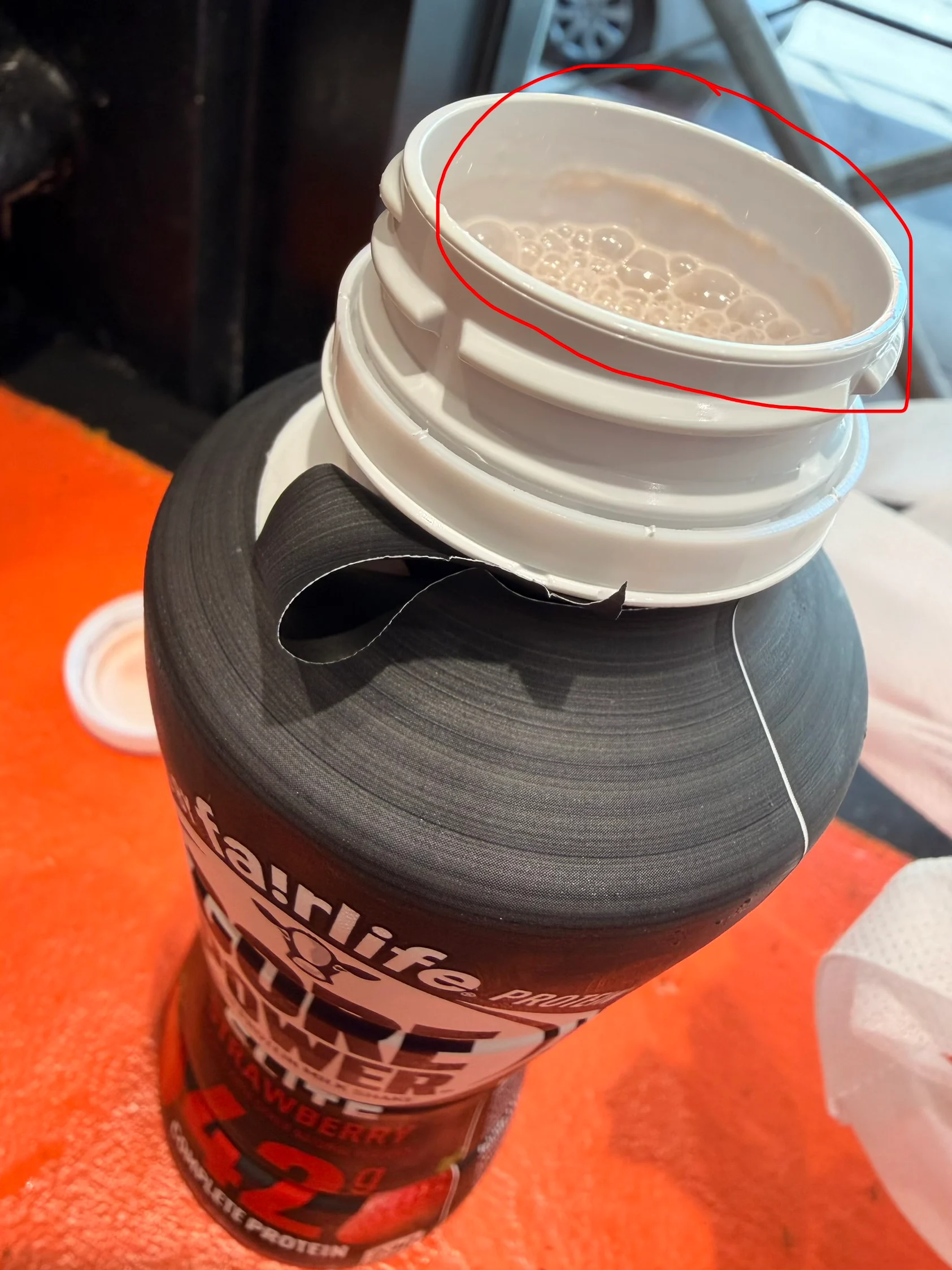
My photo. The red circle marks the residue that caught me off guard.
That taste, plus that sight, sent me straight into research. Apparently, this shake came with homework.
And before anybody says it: it wasn’t past its best-by date. The cap reads OCT16 26, October 16, 2026. I’m writing this on September 9. We can put the “bro, check the date” comment to rest.
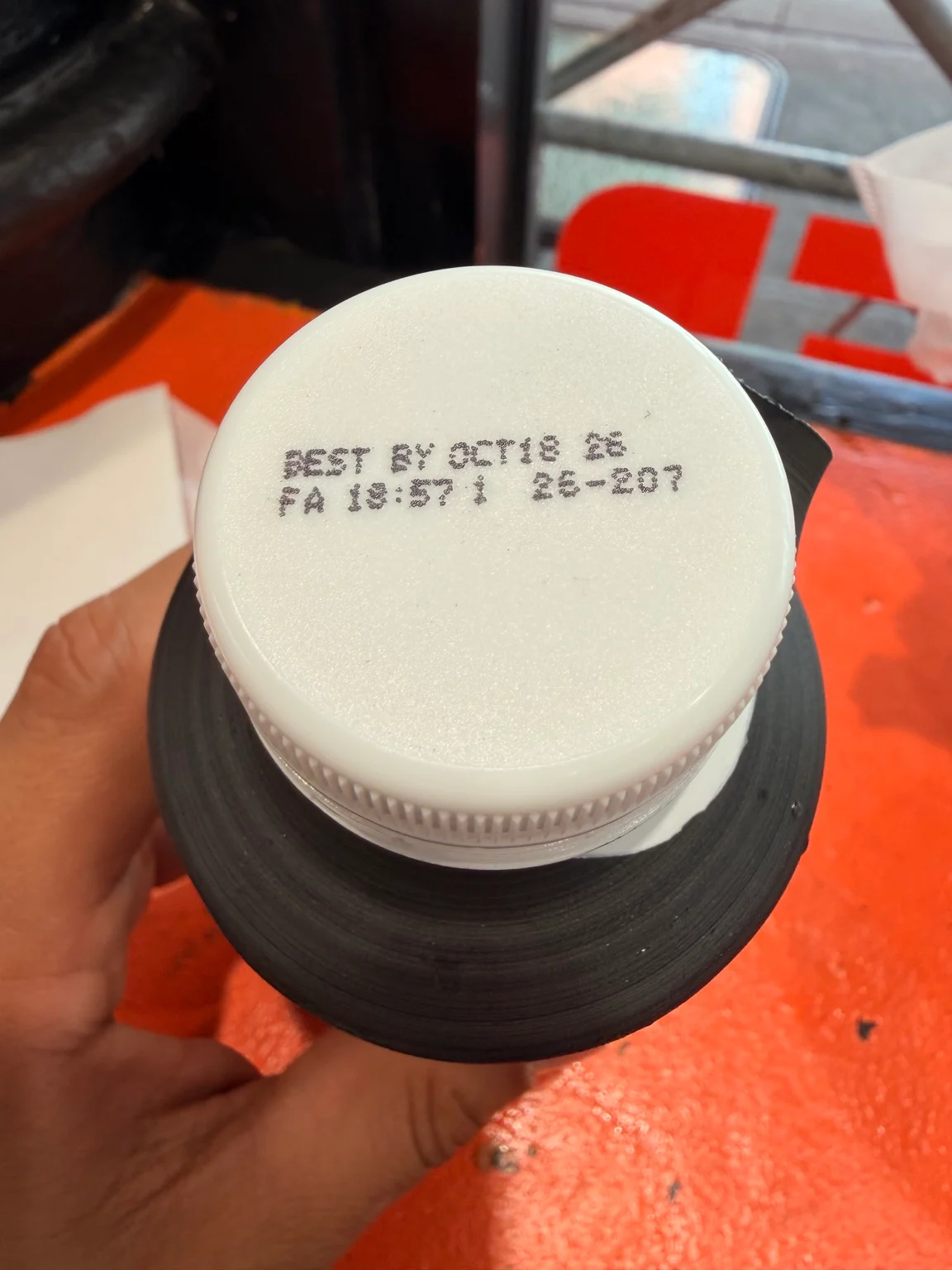
The printed best-by date had not passed when I took these photos.
So what could that ring actually be?
The first useful answer was also the most annoying: milk residue is a plausible explanation, but a photo cannot tell me exactly what that coating is.
What I can actually see is a pale pinkish-tan ring on the bottle’s inner wall, with bubbles on the drink below it. “Film” describes how it looks. I don’t have evidence to call it mold or declare it harmless.
I wanted a name. Preferably a short one. Instead, I got an introduction to how milk behaves.
Fairlife says Core Power’s protein comes from the milk itself. Its filtration process concentrates the milk’s naturally occurring casein and whey proteins; the company says it does not add protein powders or concentrates. So “undissolved protein powder” is not an explanation I can casually paste onto this bottle. Fairlife’s FAQ.
There is real research behind the idea that milk proteins can gather together and form deposits. In a 2021 experiment, researchers studied protein aggregation and sediment in ultra-high-temperature-treated skim milk under different storage temperatures and added-enzyme conditions. That establishes a possible dairy mechanism. It does not identify the ring in my Core Power: different samples, controlled conditions, no testing of my bottle. Yun and Imm, 2021.
My working explanation is that some of the drink’s milk solids may have collected or remained along the neck. That’s an inference. I did not find an official fairlife explanation confirming that this particular-looking ring is normal.
As for the bubbles, milk proteins can help stabilize foam when air gets mixed into a drink. Research on milk protein and foam.
So, yes, there are ordinary food-science explanations worth considering. My appetite still wanted to speak to a manager.
Then I read the ingredients
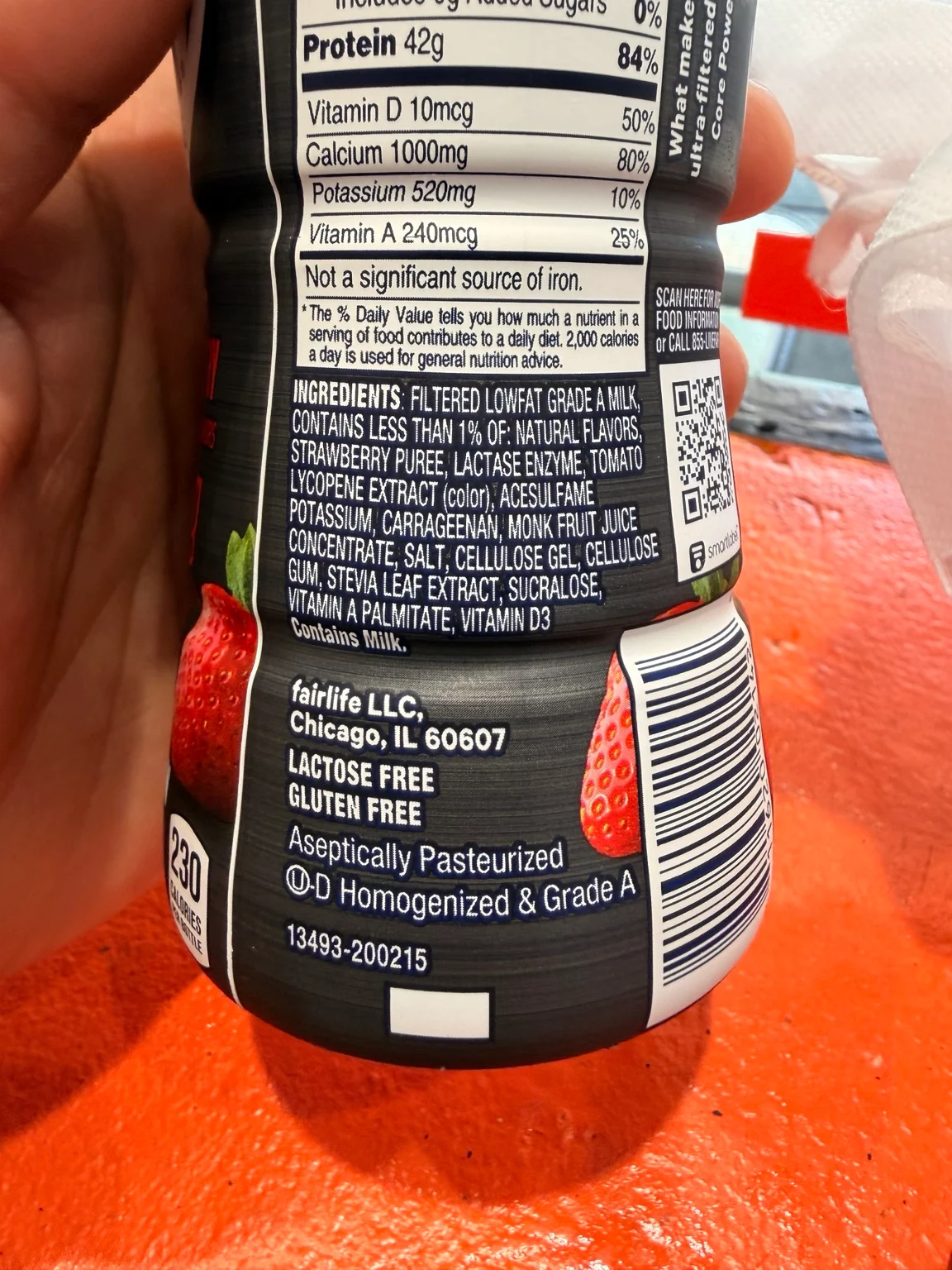
The actual label on the bottle I was drinking.
The main ingredient is filtered lowfat Grade A milk. Then the label lists strawberry purée, flavors, lactase, color, sweeteners, and ingredients including carrageenan, cellulose gel, and cellulose gum. The list matches fairlife’s product page.
Carrageenan. Cellulose gel. Cellulose gum.
Okay. What are we doing here?
This is where I have to catch myself. An unfamiliar ingredient name is not evidence that it caused the thing I disliked. My ability to pronounce something is a terrible laboratory instrument.
The University of Wisconsin’s Center for Dairy Research explains that stabilizers such as carrageenan can help dairy proteins withstand processing and reduce unwanted interactions between proteins. There’s an actual formulation job behind that ingredient. Its presence on the label does not mean the ring is “a layer of carrageenan.” Center for Dairy Research.
And there goes the easy villain.
About that taste, though
I didn’t like it. That part requires absolutely no peer review.
Explaining why I didn’t like it is harder. The label includes acesulfame potassium, monk fruit juice concentrate, stevia leaf extract, and sucralose.
A 2019 study had 20 participants evaluate sweetener samples over time. The researchers found differences in lingering sweetness and other tastes, including bitterness, depending on the sweetener. But they tested sweetener samples, not this finished strawberry shake. The study can explain why sweetener choices matter to flavor. It cannot tell me which ingredient caused my reaction. Tan and colleagues, 2019.
I also can’t establish that the ring caused the taste. They were both part of the experience that bothered me. That doesn’t automatically make one the explanation for the other.
I can be annoyed and still be accurate. Imagine that.
The date answers one question
The date hadn’t passed. That’s documented.
It doesn’t tell me the bottle’s entire storage history or identify the residue. Fairlife says Core Power can be stored at room temperature unopened, but any unused portion needs refrigeration after opening. Manufacturer’s storage guidance.
The FDA also points out that food can be unsafe without looking, smelling, or tasting spoiled, and advises discarding food that looks or smells suspicious. So tasting more of a questionable drink to “test it” isn’t a useful experiment. FDA food-storage guidance.
For a bottle-specific answer, the next sensible step would be asking fairlife to review the photos and the printed date and production code. I don’t have a manufacturer assessment of this bottle to report.
I came for protein and left with questions
Here’s where I landed: a milk-solids coating is plausible. The exact substance is unconfirmed. I disliked the taste. The bottle was within its printed best-by date. Those are the boundaries of what I can honestly say.
I still want a drink I enjoy without turning the container into a research project. Forty-two grams of protein can get my attention. The actual experience has to keep it.
And if something inside the bottle makes me stop mid-drink and say, “What is this?!?”—yeah, I’m going to look into it.
Then apparently I’m going to write a whole damn article.
TL;DR: The ring could be residue from the milk-based shake, but these photos cannot identify it or establish safety. The best-by date hadn’t passed, I didn’t like the taste, and the research gave me plausible explanations rather than a confirmed culprit.
Sources & further reading
- fairlife — Core Power Strawberry 42g: ingredients and nutrition
- fairlife — FAQ: protein source and storage instructions
- Yun & Imm (2021) — Particle size, sedimentation, and protein microstructure in UHT skim milk
- Ho and colleagues — Milk protein content, protein-to-fat ratio, and foaming
- University of Wisconsin Center for Dairy Research — Formulating Dairy Protein Beverages
- Tan and colleagues (2019) — Temporal sweetness and side tastes of 16 sweeteners
- FDA — Are You Storing Food Safely?
- fairlife — Contact Us
Research checked September 9, 2026. Photos by Luis Ruiz. The cited studies explain general mechanisms; they did not test this bottle.